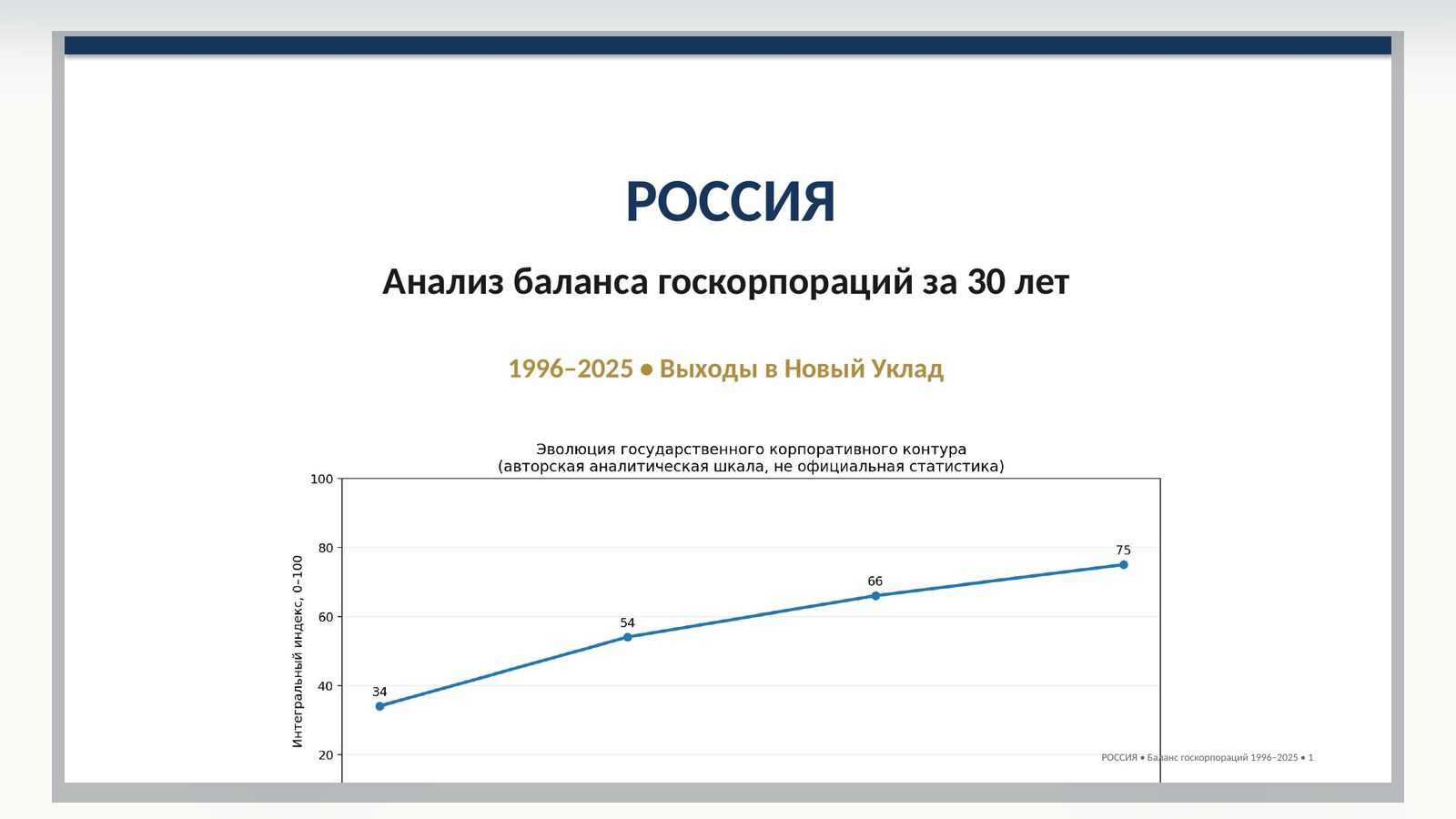
Brief annotation
About the document
A proposal for developing standards, benchmarks and digital connectivity in the construction industry.
Эволюция_стандартов_и_эталонов_Стройкомплекс_РФ.pptx
Downloading the document...
Normative-methodical support
ISO/IEC 17029 • ISO/IEC 17025 • ISO 14721:2025 OAIS • PREMIS • W3C PROV-O • NIST AI RMF / TEVV
Prepared for the Heritage Preservation Archive ecosystem and Academic Registers
August 2026
01
Summary of the decision
The new management unit is not a file or a record, but a verifiable statement with a history of origin.
What is changing
- The standard becomes a machine-readable set of requirements, not just the text of the document.
- The standard becomes a testable digital model: measuring, spatial, project, archival or algorithmic.
- The conclusion is related to the source data, method, executor, time and scope of applicability.
- AI gets the right to offer and verify, but a legally significant decision remains with the authorized person.
Proposed outcome
Create an intersystem "Contour of digital trust of the construction complex" - an add-on of rules and connections that does not replace the existing GIS. It specifies passports, API-contracts, the graph of origin and the mechanism for re-checking.
02
The Seven Stages of Evolution
Scale S0-S6 shows how much the standard is able to manage the real life cycle of the object.
| Level | Form of Standard | What can be proved | Key limitation |
|---|---|---|---|
| S0 | Paper Text | Existence of an approved norm | no machine processing |
| S1 | Electronic document | file version and signature | Requirements remain within the text |
| S2 | Register of Requirements | relevance and scope | weak connection with objects |
| S3 | Related Reference | Comparability of data between systems | The origin is not always preserved. |
| S4 | Proof Count | Who, what and on what basis has confirmed | Single IDs are required |
| S5 | Controlled | automatic verification of formal criteria | Automation is not a substitute for judgement |
| S6 | Adaptive standard | Monitoring, reviewing and learning from events | Requires management of AI and versions |
03
Standard, standard and proof
The three entities must be kept separate, but linked.
| Entity | Definition in digital circuit | Minimum passport |
|---|---|---|
| Standard | approved rule, criterion or procedure | ID, version, status, area, owner, date of action |
| Reference | reference implementation or value for comparison | type, unit, uncertainty, method, environment, version |
| Evidence | Record confirming the fulfillment of criterion | source, time, signature, hash, method of receipt, rights |
| Approval | specific testable thesis about the object | object, purpose, criterion, time, risk |
| Decision | Approval status after evaluation | status, conditions, responsible person, grounds, term of revision |
Types of digital standards
- regulatory - formalized requirement;
- measuring - value with traceability and uncertainty;
- information - data structure, directory, classifier;
- spatial - coordinate and geometric basis;
- project - approved information model of the object;
- archival - a package of preservation and history of events;
- algorithmic - control set and expected model results.
04
Unified digital contour of the construction complex
Systems perform different functions; trust arises in the connections between them.
| System | Main Function | Role in the evidence chain |
|---|---|---|
| EGISOGD "Stroycomplex.RF" | Federal Sectoral Environment and Integration | routing of information, requirements, services and statuses |
| Regional GISOGD | Subject's urban data | territorial context, documents and restrictions |
| ICUP | project management of state customers | plans, terms, cost, models, execution events |
| EGRZ | the Register of Expertise Conclusions | version of the project, conclusion and grounds of examination |
| FGIS CS | Pricing in Construction | cost data, indices and resource positions |
| EWISS | Housing data | objects, developers, disclosure and analytics |
| NSPD | A single spatial basis | coordinates, boundaries, layers, identification of the territory |
| GIS TOR KND | Automation of control and supervision | inspections, prevention, evidence, prescriptions |
| E-government services | Entry and exit of legally significant procedures | application, consent, decision, notification, appeal |
Note: System names and functional boundaries are evolving. The document uses the architectural role as of August 2026.
05
Construction complex.RF and regional GISOGD
The federal and regional levels should form one evidence vertical.
Federal level
- common API and rules of intersystem exchange;
- register of requirements and documents with versionability;
- through identifier of the capital construction object;
- Superservice "Digital construction" and monitoring of the industry.
Regional level
- territorial planning, zoning and planning documentation;
- permissions, notifications, restrictions and information about objects;
- Regional coordination processes and communication with municipalities;
- prompt updating of data on the life cycle of the object.
06
ISUP of state customers
The project system transforms the plan and information model into a continuous execution journal.
| Control area | Enroll in ISUP | External proof |
|---|---|---|
| Volume | structure of work and version of the task | Requirement from the Registry |
| Timeframe | baseline schedule and actual events | signed document / journal |
| Cost | limits, contract, changes | Positions and indices of FGIS CS |
| Project | Information Model and Conflicts | EGRZ |
| Territory | Coordinates and Limitations | NSPD / GISOGD |
| Monitoring | risks, comments, elimination | GIS TOR KND |
07
EGRZ: standard of expert solution
The conclusion should be related not only to the object, but also to the exact version of the materials tested.
Evidence-based communication
- Object ID → Application ID → version of project documentation;
- composition of engineering surveys → applied requirements;
- comments → responses → changes → recheck;
- conclusion → signatories → date → scope;
- subsequent modification of project → trigger update.
08
FGIS CS: cost standard
Price becomes evident when the source, period, territory, resource and method of calculation are visible.
| Component | Traceability requirement |
|---|---|
| Resource | single code, name, characteristics, unit of measurement |
| Price source | supplier or surveillance, period, territory, conditions |
| Index | methodology, basis, date of publication and scope |
| Estimates | version of the regulatory framework, coefficients, assumptions |
| Change | cause, initiator, impact on cost and timing |
Connections
FGIS CS ↔ ISUP: planned and actual cost. FGIS CS ↔ EGRZ: the estimated part being checked. FGIS CS ↔ register of requirements: current methodology and scope.
09
EHRN: public object status reference
These disclosures should be comparable to project, expert, and spatial information.
- common identity of the developer and the object;
- communication of the project declaration with the version of project solutions;
- monitoring of deadlines and actual readiness;
- consistency of address, coordinates and cadastral information;
- fixing the source of each public characteristic;
- machine-readable history of corrections and notifications.
10
NSPD: Spatial reference
A single coordinate basis connects the object, territory, restrictions, rights and services.
| Layer | Which confirms | Monitoring |
|---|---|---|
| Boundaries | Location of the site and object | coordinate system, accuracy, date |
| Rights | legal regime and subject of law | source EGRN, relevance |
| Limitations | Areas with special conditions of use | base, geometry, term |
| Planning | Acceptable and Planned Use | document, version, approval |
| Infrastructure | Connectivity of the object with networks and territories | data owner, completeness |
11
GIS TOR KND and electronic services
Control and service become events of a single life cycle of the object.
GIS TOR KND
Fixes preventive and control measures, risk bases, evidence, prescriptions and elimination results. Digital verification materials must be associated with the object, inspector, time, technical means and immutable journal.
E-government services
Provide legally significant entry and exit: application, set of documents, interagency requests, decision, notification and appeal. The service interface should not hide the origin of the data and the decision criteria.
12
International standards as technological roles
Standards do not replace Russian law; they provide neutral models of competence, origin, and preservation.
| Base | Role in the circuit | Practical object |
|---|---|---|
| ISO/IEC 17029 | Validation/verification of allegations, competence and impartiality | Conclusion on suitability or truth |
| ISO/IEC 17025 | Competence of testing and calibration laboratories | Measurement Protocol and Uncertainty |
| ISO 14721:2025 OAIS | Responsibility and Functions of the Long-Term Archive | Reception, storage and distribution packages |
| PREMIS | objects, events, agents and conservation rights | File history and actions with it |
| W3C PROV-O | Intersystem description of origin | Entity-Activity-Agent and derivative relationships |
| NIST AI RMF | Risk management AI | Govern–Map–Measure–Manage |
| NIST TEVV | Testing, evaluation, verification and validation AI | Control scenarios and results |
Important: NIST AI RMF — voluntary framework, and TEVV-Athlon August 2026 Published as an initial draft for discussion.
13
Graph of origin: Entity — Activity — Agent
W3C PROV-O allows you to link records of different systems without losing their independence.
| Class | Example in the construction complex | Key connections |
|---|---|---|
| Entity | requirement, model, estimate, conclusion, photo, solution | was created, revised, derived |
| Activity | research, examination, calculation, verification, migration | used the essence, gave rise to a new |
| Agent | organization, expert, laboratory, information system | performed the action, has a role and responsibility |
Minimal relationships
- "the conclusion was formed by the activities of the expert";
- "The examination used a version of the project model";
- “the project model has been revised on the basis of a comment”;
- “the decision was attributed to the authorized person”;
- "archive package is a representation of a digital object."
14
Passport of digital standard
Each requirement receives an address, history and terms of use.
| Block | Fields |
|---|---|
| Identity | STD-ID, name, class, owner |
| Legal status | reason, obligation, jurisdiction |
| Version | revision, date of action, predecessor |
| Area | objects, processes, exceptions |
| Formalization | criterion, unit, tolerance |
| Method of verification | VAL-code, data, tool, competence |
| Result | statuses, conditions, validity period |
| Connections | documents, registers, classifiers, API |
| Risks | Consequences of Error and Level of Evidence |
| Revision | triggers, periodicity, history of decisions |
15
Digital Proof Package
The unit of exchange between the systems must be self-sufficient for verification and archival storage.
| Package contents | Contents |
|---|---|
| Manifest | List of Files and Structured Records |
| Fixity | checksums and algorithms |
| Context | object, approval, purpose and applicable requirements |
| Origin | Entity-Activity-Agent, Time, Versions |
| Method | procedure, equipment, software, parameters |
| Competence | organization, role, certificate/area |
| Rights | processing basis, access, restrictions |
| Decision | status, conditions, signature, term |
| Saving | OAIS-package and PREMIS-events |
16
Validation AI in the state circuit
Automation is permissible only together with proven boundaries and a stop mechanism.
| Function NIST AI RMF | What to fix in the construction complex |
|---|---|
| Govern | owner, policy, powers, prohibitions, liability |
| Map | scenario, affected persons, data, environment and consequences |
| Measure | metrics, control sets, errors, stability, offsets |
| Manage | decision on application, restrictions, monitoring, incidents |
TEVV for model
- testing - observed behavior on given data;
- evaluation - interpretation of the result relative to the purpose and risk;
- verification - whether the system meets the specification;
- Validation - whether the system is suitable for a real scenario;
- Post-control - whether the quality is maintained after updates and drift.
17
Targeted architecture of trust
Not a new megasystem, but a coherent layer of identifiers, events, and rules.
| Layer | Function | Result |
|---|---|---|
| 1. Law and standards | Requirements and Classifiers Register | Current Norm |
| 2. Master Data | objects, persons, organizations, territories | A single identity |
| 3. Industry GIS | authoritative data on functions | Primary Records |
| 4. Origin | PROV-graph and PREMIS-events | Traceability |
| 5. Validation | ISO 17029/17025, VAL, locks | Justified status |
| 6. Archive | OAIS-packages and recovery | Long-term Evidence |
| 7. AI | RMF/TEVV and monitoring | Controlled Automation |
| 8. Services | API and electronic services | solution for citizen and organization |
18
Road map for 24 months
The transition starts with three cross-cutting cases, not total integration.
| Period | Work | Result |
|---|---|---|
| 0–3 months | owners, terminology, ID, list of systems | architectural regulations |
| 4–6 months | passport standards and evidence, API-profiles | minimum data set |
| 7–12 months | 3 pilots: examination, cost, supervision | through tracing |
| 13–18 months | PROV/PREMIS, archive packages, revalidation | The Proof Count |
| 19–24 months | AI-TEVV, independent evaluation, scaling | Decision on industrial contour |
Pilot indicators
- 100% decisions have references to exact versions of the evidence;
- at least 90% requirements have owner, status and scope;
- discrepancies in the identity of the object are identified before a legally significant decision;
- every update AI Regression TEVV;
- the archive package is restored in the control test.
19
Registers of first launch
The minimum set provides manageability without overloading the architecture.
| Code | Register | Unit of account |
|---|---|---|
| REG-STD | standards and requirements | STD-ID and version |
| REG-REF | standards and reference books | REF-ID |
| REG-OBJ | Capital construction objects | OBJ-ID |
| REG-EVD | evidence | EVD-ID and hash |
| REG-DEC | Decisions and statuses | DEC-ID |
| REG-AGT | Agents and Competences | AGT-ID |
| REG-EVT | Life Cycle Events | EVT-ID |
| REG-AI | models and sets TEVV | AI-ID / DATA-ID |
| REG-LNK | intersystem communications | Type of communication and source |
20
Sources and status of the document
Architectural proposals are separate from existing standards and state systems.
1. The RF Government. Strategic direction of digital transformation of construction and housing and utilities 2030 Year, by order of 02.03.2026 № 398-r. https://government.ru/docs/all/163630/
2. GIS EGRZ. About the register. https://egrz.ru/organisation/about-egrz
3. Rosreestr. National Spatial Data System. https://nspd.gov.ru/
4. ISO/IEC 17029:2019. Validation and verification bodies. https://www.iso.org/standard/29352.html
5. ISO/IEC 17025:2017. Testing and calibration laboratories. https://www.iso.org/standard/66912.html
6. ISO 14721:2025. OAIS reference model. https://www.iso.org/standard/87471.html
7. Library of Congress. PREMIS. https://www.loc.gov/standards/premis/index.html
8. W3C Recommendation. PROV-O. https://www.w3.org/TR/prov-o/
9. NIST. AI Risk Management Framework. https://www.nist.gov/itl/ai-risk-management-framework
10. NIST. TEVV-Athlon Framework, initial public draft, 2026. https://www.nist.gov/artificial-intelligence/ai-research/tevv-athlon-framework-evaluating-ai-systems
Source materials
Originals and versions of the document
- Эволюция_стандартов_и_эталонов_Стройкомплекс_РФ.docxDOCX · main document
- Эволюция_стандартов_и_эталонов_Стройкомплекс_РФ.pptxPPTX · related version
Other editions in web format
Each version is disclosed separately; the sequence of the source document is saved.
EVOLUTION OF STANDARDS AND STONESEvolution_standards_and_standards_Construction complex_RF.pptx · web text+
Related registries, digital evidence and verifiable solutions AI
NORMA
→ REQUIREMENT
→ PROOF
→ SOLUTION
→ REVIEW
EGYSOGD • GISOGD • ICUP • EGRZ • FGIS CS • EWISS • NSPD • GIS TOR KND
The standard goes through seven stages of maturity
SCALE S0-S6
PAPER
ELECTRONIC
REGISTER
RELATED
EXPLANATORY
EXECUTED
ADAPTIVE
text
file and signature
ID and version
Intersystem Reference
graph of origin
autocheck
Monitoring and revision
GOAL 2030: S4-S5
Proof graph + automated checks. S6 - only with fixed powers and human control.
Data sharing does not create trust
ARCHITECTURE OF TRUST
Systems can transmit the same record — and still diverge in version, source, and meaning.
IDENTITY
Versions
ORIGIN
one object gets different numbers
The conclusion refers to the old project
The public figure does not lead to the source
COMPETENCE
DURATION
It is not clear who can confirm
decision continues after change
Automatic withdrawal has no limits
The new management unit is a verifiable statement with a history of origin.
Nine systems form one life cycle
ARCHITECTURE OF TRUST
BUILDINGS.RF
GISOGD
ICUP
Federal Integration
The Territorial Context
Project and execution
EGRZ
FGIS CS
EWISS
expert solution
cost standard
Public Status
NSPD
GIS TOR KND
SERVICES
spatial basis
control and supervision
Legally significant entry/exit
Trust arises in relationships: object ID • version • source • solution • revision event
Construction complex.RF connects the federal and regional levels
ARCHITECTURE OF TRUST
FEDERAL CONTOUR
REGIONAL GISOGD
API • Register of Requirements • through object ID • Services and industry monitoring
territorial planning • restrictions • permissions • municipal processes
RULE OF INTEGRATION
The federal outline stores identifiers, key statuses, and references to authoritative sources. The region remains the owner of the primary record.
The trust should not create a parallel copy of the state.
ISUP turns the project into a journal of evidence
ARCHITECTURE OF TRUST
VOLMU
Structure of works
Register of Requirements
DURATION
schedule and events
Signed Journal
COSTS
Limits and changes
FGIS CS
PROJECT
Information Model
EGRZ
TERRITORY
Coordinates and Limitations
NSPD / GISOGD
CONTROL
Risks and elimination
GIS TOR KND
Project reference = exact version of the model + Signatures + composition of files + quality criteria + Relationship to Conclusion.
EGRZ should fix the exact version of the verified project
ARCHITECTURE OF TRUST
OBJ-ID
REQ-ID
MODEL-V
EVD-ID
DEC-ID
object
Statement
Project Version
Surveys and answers
Conclusion
RISK OF DISCOVERING VERSIONS
A positive opinion for one version of the project does not confirm subsequent changes. The mismatch must block the permit or the start of work.
The recheck trigger is created automatically when the project changes.
FGIS CS makes the cost verifiable
ARCHITECTURE OF TRUST
RESOURCE
code • properties • units
COST STANDARD
PRICE SOURCE
supplier • period • territory
Source
+ period
+ territory
+ resource
+ method
INDEX
technique • basis • area
SMETA
base version • coefficients
CHANGE
Cause • Initiator • Impact
Connections: FGIS CS ↔ ISUP ↔ USRZ ↔ requirements register
EHRN becomes a public benchmark for the state of the facility
ARCHITECTURE OF TRUST
The open feature should lead to the primary source and the date of relevance.
IDENTITY
Versions
DURATION
developer and facility
Project Declaration ↔ Project
planned and actual readiness
SPACE
SOURCE
HISTORY
address ↔ coordinates ↔ cadastre
The basis of each characteristic
corrections and notifications
Openness without data origin turns into a showcase without a verifiable basis.
NSP sets a spatial standard
ARCHITECTURE OF TRUST
BORDERS
location
coordinates • accuracy • date
RIGHTS
legal regime
source • relevance
RESTRICTIONS
Use areas
Base • Geometry • Term
PLANNING
Permissible development
Document • version • approval
INFRASTRUCTURE
Connectivity of the territory
owner • completeness
A coordinate without metadata of accuracy and origin is not a reference.
Control and public service become events of the same cycle
ARCHITECTURE OF TRUST
STATEMENT
AUTOVERPISE
INTER-AGENCY DATA
EXPERTISE
User
Requirements
authoritative sources
Competent person
DECISION
OVERSIGHT
ARCHIVE
REVIEW
status and conditions
evidence
package and events
object change
GIS TOR KND records the basis of risk, measure, evidence, prescription and elimination.
Each international standard is responsible for its own layer.
ARCHITECTURE OF TRUST
ISO/IEC 17029
Approval and decision
ROLE
ISO/IEC 17025
Measurement and Competence
not to replace Russian law, but to give a neutral model of verification, origin and preservation
OAIS
Long term archive
PREMIS
Save Events
W3C PROV-O
Origin of data
NIST AI RMF
Risks AI
NIST TEVV
Testing and evaluation AI
NIST AI RMF is a voluntary framework; TEVV-Athlon was published as an initial draft in 2026.
The graph of origin connects systems without merging them.
ARCHITECTURE OF TRUST
ENTITY
ACTIVITY
AGENT
model • estimate • conclusion • photos
prospecting • calculation • examination • verification
Organization • Expert • Laboratory • GIS
The conclusion was created by the activity of examination using the exact version of the model and attributed to the authorized agent.
Digital passport contains 10 blocks
ARCHITECTURE OF TRUST
ID and owner
Legal status
Version and Dates
scope of application
criterion and tolerance
Method VAL
Status of decision
Communications and API
Risk of Error
Review triggers
STD-ID is retained during editorial change; the semantic norm receives a new version or ID.
The evidence package restores the course of the decision
ARCHITECTURE OF TRUST
MANIFEST
FIXITY
CONTACTS
Composition
Integrity
object and purpose
ORIGIN
METHOD
COMPETENCE
agents and versions
Procedure and Software
Role and Area
RIGHTS
DECISION
CONSERVATION
Access and Restrictions
status and term
OAIS + PREMIS
The independent reviewer must restore the decision without access to informal correspondence and the memory of the participants.
AI passes risk management and TEVV
ARCHITECTURE OF TRUST
GOVERN
MAP
MEASURE
MANAGE
Powers and Prohibitions
scenario and consequences
metrics and errors
solution and monitoring
TEVV
Behavior Testing
assessment of the objective
Specification Verification
Validation of the real scenario
Post-control updates
PROHIBITED HOUSE
AI does not issue a legally significant opinion and does not change the canonical record without a legal basis and a responsible person.
Target architecture - eight agreed layers
ARCHITECTURE OF TRUST
LAW AND STANDARDS
MASTER DATA
INDUSTRIAL GIS
ORIGIN
Current Norm
A single identity
Primary Records
Traceability
VALIDATION
ARCHIVE
SERVICES
Justified status
Long-term Evidence
Controlled Automation
solution for the user
Authoritative source owns the record; the trust layer stores connections, quality statuses, and evidence.
Launch starts with three cross-cutting cases
ROAD MAP 24 MONTH
7–12
13–18
19–24
RULES
PASPORT
3 PILOT
GRAF
MASSHTAB
owners • ID • terminology
Standard • Proof • API
examination • cost • supervision
PROV • PREMIS • archive
AI-TEVV • independent evaluation
REG-STD
REG-OBJ
REG-EVD
REG-DEC
REG-EVT
REG-AI
Requirements
objects
evidence
Solutions
Events
Model TEVV
Approve: Registry owner • authority matrix • critical gateways • three pilot objects
Sources indicated in the presentation 26
- Interior architectural concept, 2026.
- Internal scale S0-S6. The project model, not the state standard.
- Government of the Russian Federation, Order of 02.03.2026 № 398-r: https://government.ru/docs/all/163630/
- Government of the Russian Federation, strategy of digital transformation of construction and housing and communal services up to 2030: https://government.ru/docs/all/163630/
- GIS EGRP: https://egrz.ru/organisation/about-egrz
- NSPD: https://nspd.gov.ru/
- Internal design reference model, 2026.
- GIS EGRZ, system purpose: https://egrz.ru/organisation/about-egrz
- Internal model of version traceability, 2026.
- FGIS CS: https://fgiscs.minstroyrf.ru/
- ESS: https://наш.дом.рф/
- Rosreestr, NSPD: https://nspd.gov.ru/
- Government of the Russian Federation, digitalization of control and supervisory activities: https://government.ru/news/58093/
- ISO/IEC 17029:2019: https://www.iso.org/standard/29352.html
- ISO/IEC 17025:2017: https://www.iso.org/standard/66912.html
- ISO 14721:2025 OAIS: https://www.iso.org/standard/87471.html
- PREMIS: https://www.loc.gov/standards/premis/index.html
- W3C PROV-O: https://www.w3.org/TR/prov-o/
- NIST AI RMF: https://www.nist.gov/itl/ai-risk-management-framework
- NIST TEVV-Athlon: https://www.nist.gov/artificial-intelligence/ai-research/tevv-athlon-framework-evaluating-ai-systems
- Internal form of digital standard passport, 2026.
- NIST AI RMF 1.0: https://www.nist.gov/publications/artificial-intelligence-risk-management-framework-ai-rmf-10
- NIST AI RMF Playbook: https://www.nist.gov/itl/ai-risk-management-framework/nist-ai-rmf-playbook
- NIST TEVV-Athlon, initial public draft, 2026: https://www.nist.gov/artificial-intelligence/ai-research/tevv-athlon-framework-evaluating-ai-systems
- Internal target architecture, 2026.
- Internal roadmap and registers of the first launch, 2026.