Brief annotation
About the document
A single mechanism for turning scientific initiatives into serial production and scalable result
Draft concept for discussion and formal harmonization
НПП_АСИ_ЭКВИЛИБРИУМ.pptx
Downloading the document...
Version 1.0 · 22 August 2026
Moscow
Status and purpose of the document
This document is a draft concept. It does not imply approval of the programme by the Agency for Strategic Initiatives and does not establish commitments for listed organizations. Participation of ASI, federal bodies, development institutions and other partners is subject to official approval, legal, financial and technical verification.
Summary for decision
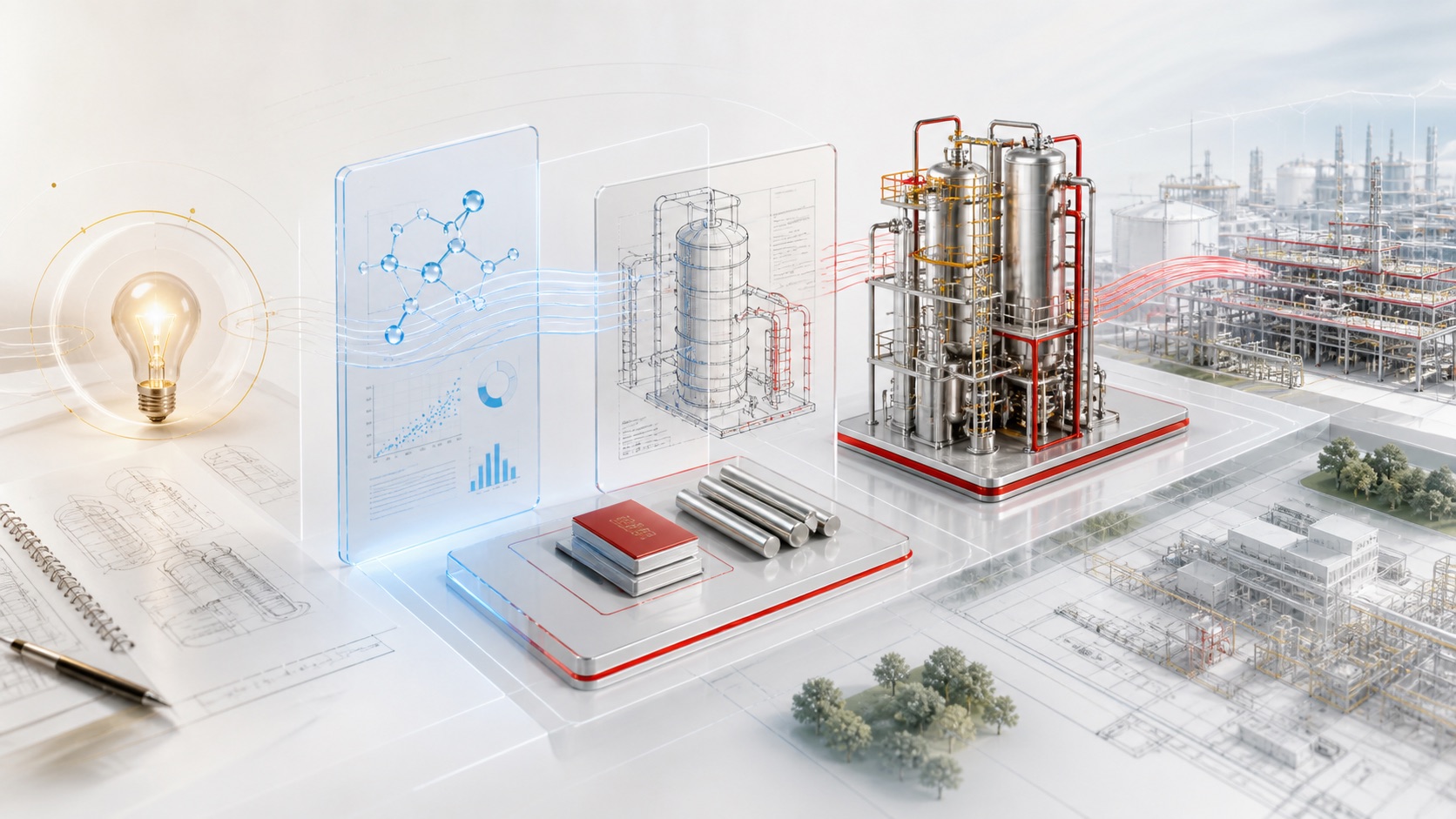
NPP ASI "EQUILIBRIUM" is a proposed full-cycle research and production program. Its task is to bridge the gap between scientific development and serial implementation, forming a single trajectory from the initiative to a confirmed social, environmental and economic result.
The program is built around seven interrelated contours: strategic, initiative, scientific, industrial, financial and contract, territorial and digital. A special role is given to the model ECO-PPA - a system of long-term contracts for measurable results that can form the projected demand and the basis for project financing.
| Contour | Function | Proposed outcome |
|---|---|---|
| ASI | Selection of initiatives, removal of barriers, work with regions and scaling | Portfolio of decisions of federal and regional significance |
| EQUILIBRIUM | Monitoring, modeling, balancing of resources and results | Digital Single Picture Program |
| ECO‑PPA | Long-term energy order, resource, environmental or social impact | Predictable revenue and investment base |
| SPECZASHCHITA | Co-operative Organization of Execution and Assembly of Consortiums | Production chains and project teams |
| Science and education | Research, expertise, personnel, testing | Confirmed technology and competences |
| Business and regions | Production, sites, operation, procurement of the result | Pilots, production facilities and jobs |
Proposed action
- Agree on the development of the program passport and the creation of an organizing committee.
- Identify 3–5 pilot regions and at least 10 first technological projects.
- Develop standard regulations for selection, examination, piloting and ECO-PPA.
- To form a scientific and technical council, an industrial council and an investment committee.
- Launch a digital register of initiatives, projects, indicators and confirmed results.
- Following the results of the pilot cycle, prepare a proposal for federal scaling.
Contents
- 1. Passport of the program
- 2. Strategic context and issues
- 3. Mission, purpose and principles
- 4. Target Model and Architecture
- 5. 19 scientific and production directions
- 6. Full cycle project conveyor
- 7. Mechanism ECO‑PPA
- 8. Management system and roles of participants
- 9. Financial model
- 10. Digital Platform EQUILIBRIUM
- 11. The Pilot Portfolio
- 12. Performance indicators
- 13. Road map
- 14. Risks and control
- 15. Package of solutions for launch
- Annexes
1. Passport of the program
| Parameter | Contents |
|---|---|
| Full name | Scientific and production program of strategic initiatives "EQUILIBRIUM". |
| Short name | NPP ASI "EQUILIBRIUM". |
| Document type | Draft inter-sectoral programme concept. |
| Horizon | Pilot cycle — 2026–2028 years; scaling up to 2030 year; further horizon is determined by results. |
| Mission | To ensure the transformation of scientific and technological initiatives into serial solutions that improve the sustainability of the economy, territories, natural systems and the quality of life. |
| Goal | Create a replicable full-cycle mechanism: an initiative → Expertise → Co-operation → resource support → Pilot → Confirmed result → Scaling. |
| Subject | Scientific developments, technological products, production projects, territorial complexes and systems of measurable effect. |
| Project operator | It is determined by the decision of the participants; the project office of the NPP with the participation of ASI and authorized partners is offered. |
| Platform framework | EQUILIBRIUM is a digital environment for observation, forecasting, coordination and control. |
| Contractual framework | ECO-PPA is a family of long-term supply agreements and a confirmed result. |
| Cooperative framework | SPECZASHCHITA and other accredited cooperative/industrial operators. |
| Scale | 19 program directions; detailing up to 13 sub-directions in each contour - after industry expertise. |
| Financing | Mixed model: grants, R&D, subsidies, project financing, PPP, corporate order, long-term contracts, investment capital. |
| Key result | A portfolio of technologies and facilities brought to industrial operation and sustainable demand. |
2. Strategic context and issues
Russia has a strong scientific school, engineering competencies, resource base and large-scale domestic demand. However, the transition from research to mass application often breaks down into unrelated stages: the developer does not see the customer, the industrialist does not see the confirmed market, the investor does not see the projected cash flow, and the region does not see the solution with clear responsibility.
2.1. Key gaps
- between basic and applied science;
- between prototype and industrial design;
- between the pilot and the serial order;
- between the environmental effect and its economic assessment;
- between sectoral departments and territorial management;
- between multiple initiatives and a single portfolio of priorities;
- between financing capital costs and paying for the result of the life cycle.
2.2. Required transition
| Current Logic | Target logic |
|---|---|
| Support for selected activities | Managing a portfolio of measurable results |
| Cost financing | Financing the achievement and exploitation of the result |
| Separated Pilots | Typical solutions with conditions of replication |
| Activity reporting | Verification of technological, social and environmental effects |
| Departmental isolation | Interdepartmental and intersectoral cooperation |
| Short-term procurement | Life cycle contract and ECO-PPA |
3. Mission, purpose and principles
3.1. Mission
To create a Russian system of knowledge transformation into a productive force that ensures technological sovereignty, security, environmental recovery and improving the quality of life.
3.2. Strategic objective
By the year 2030, a working scientific and production conveyor capable of annually bringing the selected initiatives to confirmed pilots, serial production and long-term contracts will be formed.
3.3. Principles
Full life cycle. The solution is considered from research to operation, maintenance and disposal.
Evidence. Each result is confirmed by measurements, independent examination and traceable data.
technological sovereignty. Priority for Russian competencies, critical components and localization.
Cooperation. Participants pool resources around a common program while maintaining legal and economic autonomy.
Results instead of process. Funding and evaluation are tied to readiness, impact and implementation.
Safety of the project. Technical, environmental, information and financial security are laid at the start.
Open scalability. The architecture allows the connection of new regions, industries and partner countries.
Balance of interests. Decisions take into account the interests of the state, people, business, territory and the natural environment.
4. Target Model and Architecture
The target model includes seven contours that work simultaneously and do not replace each other.
| Contour | Key issue | Mechanism |
|---|---|---|
| Strategic | What tasks have a national priority? | Program Council, map of challenges and priorities. |
| Initiative | What solutions and teams are there? | SFERA initiatives, open and targeted selection. |
| Scientific | Does the technology work and how ready is it? | Examination, TRL, testing, R&D. |
| Production | Who and where will make the decision? | Consortiums, Industrial Partners, SPECZASHCHITA. |
| Financial and Contractual | What is the object created and paid for? | Mixed funding and ECO-PPA. |
| Territorial | Where will the effect be? | Pilot regions, municipalities, enterprises. |
| Digital | How to see the state and make decisions? | EQUILIBRIUM: registers, digital twins, monitoring. |
5. Nineteen research and production areas
| № | Area of work | Contents |
|---|---|---|
| 01 | Distributed and autonomous energy | Small generation, microgrids, hybrid complexes, energy stability of territories. |
| 02 | Energy storage and management | Drives, power electronics, forecasting and dispatching. |
| 03 | Eco-modules of life | Autonomous modules of housing, infrastructure, water, energy, communications and recycling. |
| 04 | Water technology | Cleaning, reuse, monitoring, desalination and protection of water bodies. |
| 05 | The circular economy | Sorting, processing, material return, industrial symbiosis. |
| 06 | Restoration of soils and territories | Reclamation, soil stabilization, restoration of fertility and landscapes. |
| 07 | Materials of the new generation | High purity materials, composites, coatings, functional and secondary materials. |
| 08 | Green Building and Housing | Energy-efficient buildings, network modernization, digital resource management. |
| 09 | Environmental transport and logistics | Low-emission transport, charging and service infrastructure, flow optimization. |
| 10 | Agro- and biotechnology | Closed farms, biologics, soil microbiology, food sustainability. |
| 11 | Biocenous monitoring | Autonomous observation points for air, water, soil, biodiversity and load. |
| 12 | Climatic adaptation | Managing the risks of heat, floods, fires, droughts and degradation of natural systems. |
| 13 | Industrial automation | Robotization, predictive maintenance, quality control, lean manufacturing. |
| 14 | Industrial Artificial Intelligence | Models for designing, operating, optimizing and supporting solutions. |
| 15 | Digital twins | Models of enterprises, cities, infrastructure and natural and technical systems. |
| 16 | Medicine, rehabilitation and health | Rehabilitation complexes, assistive technologies, prevention and health saving. |
| 17 | Safety and resilience | Early warning, protection of infrastructure, sustainability of chains and facilities. |
| 18 | Personnel and engineering education | Design schools, practices, scientific tourism, training of operators of new industries. |
| 19 | Standards, Verification and Exports | Testing, certification, ESG-IR, international recognition and export packages. |
Each direction can be detailed up to 13 sub-directions. Final Matrix 19 × 13 is formed not mechanically, but after sectoral expertise, analysis of national goals, technological priorities and real portfolio of projects.
6. Full cycle project conveyor
| Stage | Contents | Benchmark |
|---|---|---|
| 1. Login | Registration of the initiative, rights holder, team, need and expected effect. | Project card. |
| 2. Screening | Alignment with priorities; checks of completeness, safety and conflicts of interest. | Decision on admission. |
| 3. Expertise | Scientific, technological, legal, patent, market and financial assessment. | Expert opinion. |
| 4. Design | Profile, KPIs, budget, schedule, data architecture and risk architecture. | Pilot design. |
| 5. Cooperation | Selection of manufacturers, a site, a customer, an investor and a verifier. | Consortium. |
| 6. Resource support | Funding for R&D, CAPEX, working capital and infrastructure. | Financial close. |
| 7. Pilot | Creation of a sample / object and operation in specified conditions. | Pilot protocol. |
| 8. Verification | Measurement of results, data audit, reliability assessment and life-cycle assessment. | Confirmed effect. |
| 9. Certification | Compliance with mandatory requirements and voluntary standards. | Approval for use. |
| 10. Contract | Supply contract, service contract, concession, off-take or ECO-PPA. | Guaranteed demand. |
| 11. Series | Organization of production, quality control, logistics and service. | A series-production product. |
| 12. Scaling | Replication, localisation, export and training of new operators. | Network of implementations. |
6.1. Technological readiness system
To unify solutions, it is recommended to apply the scale of technological readiness levels (TRL) with the addition of production, market and regulatory readiness levels. The transition between the stages is carried out only after passing the control gate.
- TRL - confirmation of the technology;
- MRL - readiness of the production process;
- CRL - Customer and market readiness;
- RRL - regulatory and certification readiness;
- IRL - integration readiness to work in a larger system.
7. Mechanism ECO‑PPA
ECO-PPA is proposed as a family of long-term agreements in which the subject of payment is not only the energy supplied, but also a measurable resource, environmental, infrastructure or social result.
| Type of agreement | Subject | Example of indicator |
|---|---|---|
| Energy PPA | Electric/thermal energy | kW·h, Gcal, power availability. |
| Efficiency PPA | Savings Resource | Decrease in consumption relative to the baseline. |
| Water PPA | Prepared or saved water | m³, quality, reuse. |
| Waste PPA | Processing and return of materials | Tons, extraction share, quality of recyclables. |
| Nature/Restoration PPA | Restoration of the natural system | Area, biodiversity index, soil condition. |
| Infrastructure PPA | Availability and quality of infrastructure function | Readiness, reliability, coverage. |
| Social Impact PPA | Confirmed social outcome | Rehabilitation outcome, service availability, employment. |
7.1. Mandatory elements ECO‑PPA
- Baseline and measurement method.
- Results and quality requirements.
- Term, volume, price and indexation formula.
- Responsibility for creation, operation and maintenance.
- Data access and independent verification.
- Adjustment mechanism when conditions change.
- Distribution of technological, market and regulatory risks.
- Conditions for early termination, replacement of the operator and transfer of the object.
8. Management system and roles of participants
| Organ | Functions | Composition / principle |
|---|---|---|
| Strategic Council | Priorities, key decisions, interagency coordination. | Authorized representatives of the state, ASI and key partners. |
| Scientific and Technical Council | Techniques, expertise, technological gates, ethics and security. | Scientists, engineers, industry experts, test centers. |
| The Industrial Council | Cooperation, localization, production, quality and service. | Enterprises, CCI, RSPP, industry associations. |
| Investment Committee | Financial models, risks, instruments and financing conditions. | Development institutions, banks, foundations, customers. |
| Project Office | Daily portfolio management, regulations, reporting and support. | Professional team of the program. |
| Regional offices | Platforms, permits, infrastructure, regional support measures. | Authorities, development corporations, municipalities. |
| Verification Center | Metrics, baselines, data and effects audits. | Independent accredited organizations. |
8.1. Proposed roles
| Participant | Proposed role |
|---|---|
| ASI | Initiatives, support services, barriers, regions, leadership projects and replication. |
| Profile Ministries | Regulatory policy, state programs, sectoral priorities and support measures. |
| RAS, universities, REC | Scientific expertise, R&D, laboratories, human resources and research infrastructure. |
| RF CCI and regional chambers | Search for enterprises, business expertise, interregional and external cooperation. |
| RSPP and Industry Unions | Corporate demand, industrial partners, standards and scaling. |
| SPECZASHCHITA | Assembly of project consortia and cooperative organization of execution. |
| EQUILIBRIUM | Digital registry, analytics, resource balance, digital twins, monitoring KPI. |
| Regions | Needs, sites, infrastructure, permitting processes and regional order. |
| Banks and funds | Financing, guarantees, risk assessment and investment discipline. |
| Customers | Terms of reference, acceptance of the result, long-term contract and operation. |
9. Financial model
The financial architecture must be appropriate to the project stage. In the early stages, grant and budget risk instruments predominate, in the later stages project financing, corporate order and cash flow under long-term contracts.
| Stage | Need | Possible tools |
|---|---|---|
| Research | Scientific hypothesis, laboratory base, team. | Grants, research, targeted funding, university programs. |
| Prototype | Design work, materials, tests. | R&D, venture financing, corporate accelerator. |
| Pilot | Equipment, site, connection, monitoring. | Subsidies, regional support, partner funding. |
| First series | Line, working capital, certification. | Preferential loan, bank loan, leasing, guarantees. |
| Scaling | Network of facilities and production facilities. | Project financing, PPP, concession, bonds/CFA with legal admissibility. |
| Operation | Service, service, purchase of the result. | Revenue from ECO to PPA, service or life contract. |
9.1. The principle of financial discipline
- separate accounting of funds by projects and stages;
- financing in tranches after the control gate;
- a unified register of contracts, obligations and results;
- independent technical and financial control;
- banning double funding of one result;
- disclosure of beneficiaries, conflicts of interest and intellectual property rights;
- reservation of funds for operation, service and decommissioning.
10. Digital Platform EQUILIBRIUM
EQUILIBRIUM serves as the digital environment of the program, but does not replace state information systems and departmental registers. Integration is carried out on the basis of agreements, security requirements and data legislation.
| Module | Purpose |
|---|---|
| Register of initiatives | Unified development cards, teams, rights and statuses. |
| Map of needs | Requests from regions, enterprises and industries. |
| Roster of experts | Competence, independence, history of conclusions. |
| Program Portfolio | Stages, control gates, resources, deadlines and solutions. |
| Digital twins | Modeling of object, territory and scenarios. |
| Outline ECO-PPA | Basic lines, indicators, delivery and payment schedules. |
| Biocenose monitoring | Observation point data and ecosystem status indices. |
| Management dashboard | Risks, deviations, effects and the need for solutions. |
| Verification outline | Origin of data, measurement protocols, conclusions. |
| Knowledge Center | Standards, model documents, project results and lessons. |
10.1. Data requirements
- traceability of the origin and changes in data;
- access differentiation and logging of actions;
- compatibility with Russian information security requirements;
- machine-readable metrics and open interfaces where permissible;
- storage of evidence, protocols and versions of methods;
- minimization of personal and sensitive data;
- Independent audit of algorithms that influence funding and admission decisions.
11. Proposed pilot portfolio
| № | Pilot | Contents | Base area |
|---|---|---|---|
| 1 | Ecomodule | Autonomous complex of energy, water, communications, housing and processing for remote territory. | Region / municipality |
| 2 | Mini-generation | Hybrid local power system with storage and digital control. | Social or industrial facility |
| 3 | Biocenous point | Continuous monitoring of air, water, soil, biodiversity and load. | OPPT / industrial zone |
| 4 | Closed water cycle | Water purification and reuse with quality assurance. | Company / Housing |
| 5 | Material processing | Return of valuable components and safe disposal of complex waste. | Industrial cluster |
| 6 | Soil stabilization | Technology of strengthening the grounds and restoration of disturbed lands. | Road / construction object |
| 7 | High purity materials | The pilot line for obtaining materials 6N and the accompanying quality system. | Scientific and Production Site |
| 8 | Biofarm | Closed agrobiotechnological module with resource monitoring. | Rural area |
| 9 | Rehabilitation module | Complex of diagnostics, recovery and human support. | Medical / Social Organization |
| 10 | Digital twin | Model of resources, infrastructure and risks of pilot territory. | Regional Project Office |
11.1. Criteria for selecting a pilot
- strategic importance and confirmed need of the customer;
- technological readiness sufficient for testing in real conditions;
- the presence of the right holder and an understandable model of intellectual rights;
- measurable result and the ability to set a baseline;
- platform, responsible operator and access to infrastructure;
- certification plan and regulatory feasibility;
- financial model of the first series and the potential for replication;
- acceptable safety and risk profile.
12. Performance indicators
The indicators should be fixed after the initial inventory. The following are the proposed pilot cycle benchmarks that need to be agreed with participants and the financial model.
| Group | Indicator | Target by the end of 2028 |
|---|---|---|
| Portfolio | Passed primary screening | at least 100 initiatives |
| Expertise | Obtained a comprehensive conclusion | at least 50 projects |
| Pilots | Launched in real conditions | at least 19 pilots |
| Verification | Confirmed the stated result | at least 12 projects |
| Production | Moved to the first series | at least 10 solutions |
| Contracting | Long-term contracts concluded / ECO-PPA | at least 10 agreements |
| Geography | Participate in the pilot circuit | at least 5 regions |
| Cooperation | Scientific and industrial partners are connected | at least 50 organizations |
| Standards | Methods and model documents developed | at least 5 packages |
| Exports | Proposals for foreign markets | at least 5 solutions |
12.1. Balance of indicators
It is unacceptable to evaluate the program only by the number of events, applications or participants. The top-level index should take into account five dimensions: technological readiness, production readiness, economic sustainability, confirmed effect and scale of implementation.
13. Road map
| Period | Stage | Key results |
|---|---|---|
| 0–3 months | Organization | Organizing committee; program passport; regulations; partner card; preliminary portfolio. |
| 3–6 months | Design | Examination; selection of regions; model documents; data architecture; financial models. |
| 6–12 months | Pilot training | the consortiums; TK; sites; permits; financing; basic measurements. |
| 12–24 months | Piloting | Creation of facilities; operation; monitoring; adjustment; certification. |
| 18–30 months | First series | Production training; contracts; service; training of operators. |
| 24–36 months | Scaling | Circulation; regional packages; exports; proposals for institutionalization. |
13.1. First 100 days
- Designate a responsible action team and secretariat.
- Agree on terminology, program boundaries and outcome criteria.
- Build a registry of at least 30 source initiatives and 20 technology needs.
- Conduct rapid screening and select 10 projects for in-depth examination.
- Identify 3–5 potential pilot regions.
- Prepare a standard project passport, consortium agreement and structure ECO-PPA.
- Develop a prototype digital registry and portfolio panel.
- To hold a strategic session with scientific, industrial and financial partners.
- Prepare an estimate of the pilot cycle and a list of sources of funding.
- To submit a package of decisions for consideration by the authorized bodies of the program.
14. Risks and control system
| Risk | Level | Management measures |
|---|---|---|
| Substitution of the result with activity | High | Check gate, measurable KPI, independent verification. |
| Insufficient maturity of technology | High | TRL/MRL-audit, step-by-step, backup technical solutions. |
| Absence of customer | High | Proof of need before pilot funding; preliminary offtake. |
| Regulatory Incompatibility | Medium/High | Legal examination at the entrance, regulatory road map. |
| Conflict of intellectual rights | High | Patent audit, contractual fixation of rights and licenses. |
| Increase in cost and timing | High | Independent estimates, reserves, stage financing, change control. |
| Inaccuracy of environmental effect | High | Basic line, M&V methodology, data audit, independent verifier. |
| Dependence on one supplier | Medium | Localization, alternative components, insurance stock. |
| Cyber and information threats | High | Threat model, segmentation, domestic protection, audit. |
| Reputational risks | Medium | Correct positioning of status, public evidence, ethical control. |
15. Package of solutions for launch
To move from the concept to the current program, it is proposed to prepare and agree on the following set of documents:
- decision to establish an organizing committee.
- Passport NPP ASI "EQUILIBRIUM".
- Regulations on the management system and project office.
- Regulations for selection, examination and passing of the control gate.
- Methodology for assessing technological, production and market readiness.
- Standard passport of the scientific and production project.
- Model agreement of the project consortium.
- Measurement and verification of results.
- Concept and model structure ECO-PPA.
- Regulation on the digital registry and data handling.
- Criteria for the selection of pilot regions and facilities.
- Financial model and budget of the pilot cycle.
- Communication strategy without premature statements of official status.
- Plan of legal, antimonopoly, procurement and information security expertise.
Annex 1. Project Card
| Field | Content required |
|---|---|
| 1. Name | Brief and full name of the initiative. |
| 2. Initiator | Organization, team, contact person. |
| 3. Problem | Confirmed need and scale. |
| 4. Decision | Technology, product, object or service. |
| 5. Readiness | TRL / MRL / CRL / RRL / IRL. |
| 6. Intellectual rights | Rights holders, patents, licenses, restrictions. |
| 7. Customer | Potential buyer or recipient of the result. |
| 8. Playground | Region, facility, infrastructure conditions. |
| 9. Indicators | Base line, units, target values. |
| 10. Budget | R & D, CAPEX, OPEX, Reserve and Sources. |
| 11. Team and cooperation | Competences, manufacturers, experts, operator. |
| 12. Risks | Technical, legal, financial, environmental. |
| 13. Scaling | Seriality, market, localization, export. |
Annex 2. Minimum composition of expert opinion
- summary and unambiguous recommendation: allow, modify or reject;
- assessment of scientific novelty and evidence;
- assessment of technological and production readiness;
- patent purity and the right to result;
- safety requirements and environmental restrictions;
- analysis of the market, the customer and competitive solutions;
- Financial feasibility and sensitivity of the model;
- a list of assumptions, data gaps and mandatory conditions;
- pilot plan, criteria for success and termination;
- potential for replication and systemic effect.
Annex 3. Terminological minimum
| Term | Working definition |
|---|---|
| Initiative | A proposal to create or implement a solution that has not yet passed a full qualification cycle. |
| Project | Initiative with approved passport, resources, responsible and control results. |
| Pilot | Limited implementation in real conditions to test predefined hypotheses. |
| Verification | Confirmation of the reliability of the data and the result achieved according to the established methodology. |
| Scaling | Reproducible implementation of the solution at new facilities without loss of quality and economy. |
| ECO‑PPA | A long-term supply agreement and/or a proven resource, environmental, infrastructure or social outcome. |
| EQUILIBRIUM | Proposed digital and organizational environment for program observation, forecasting, coordination and control. |
| Check gate | Formalized point of the decision to continue, adjust, suspend or terminate the project. |
Conclusion
NPP ASI "EQUILIBRIUM" is proposed not as another list of initiatives, but as a discipline for bringing initiatives to results. Its meaning is to combine the strengths of science, state, industry, regions and society into a reproducible system, where each project has a customer, an evidence base, a production chain, a financial model and an understandable effect.
The program can become a practical outline of the image of the future: a technologically sovereign economy in which the development of production simultaneously strengthens security, restores the natural balance and improves the quality of human life.
Source materials
Originals and versions of the document
- НПП_АСИ_ЭКВИЛИБРИУМ.docxDOCX · main document
- НПП_АСИ_ЭКВИЛИБРИУМ.pptxPPTX · related version
Other editions in web format
Each version is disclosed separately; the sequence of the source document is saved.
"EQUILIBRIUM"NCE_ACI_EQUILIBRIUM.pptx · web text+
A single mechanism for turning scientific initiatives into serial production and scalable result
NPP ASI
Draft concept for discussion and formal harmonization
EQUILIBRIUM
22 August 2026
Strong developments are lost between science and the market
NPP ASI “EQUILIBRIUM”
Today, the path of technology is breaking down into unrelated sections
KEYWORD
DIVISIONS
SCIENCE
No guaranteed customer
PROTOTIP
Not ready for serial production
Idea
PILOT
does not go to scale
Series
INVESTOR
I don’t see predictable cash flow.
We need a full cycle path.
REGION
does not receive a ready-made solution with the responsible operator
The program combines seven contours into one system
NPP ASI “EQUILIBRIUM”
STRATEGY
INITIATIVES
SCIENCE
PRODUCTION
FINANCE
TERRITORIES
DATA
national objectives
Solutions and Teams
Expertise and R&D
Collaboration and series
Capital and contract
Pilots and implementation
control of the result
Outcome: a single portfolio of projects with customer, manufacturer, financing and measurable effect
The initiative goes through twelve control stages
NPP ASI “EQUILIBRIUM”
Sign in
Screening
Expertise
Design
Cooperation
Financing
Pilot
Verification
Certification
Contract
Series
Scale
Transition between stages - only after confirmation of readiness, data and responsibility
19 areas cover resource and industrial basis
NPP ASI “EQUILIBRIUM”
Distributed Energy
Energy storage
Eco-modules
Water technology
Closed loop
Soil restoration
New materials
Green Building
Environmental transport
Agro- and biotechnology
The first circuit is the production of energy, resources, materials and sustainable infrastructure
Digital, social and institutional contours complete the system
NPP ASI “EQUILIBRIUM”
Biocenous monitoring
Climatic adaptation
Industrial automation
Industrial AI
Digital twins
Medicine and rehabilitation
Safety and resilience
Engineering personnel
Standards and exports
Each direction is detailed up to 13 sub-directions after industry expertise
ECO-PPA converts the confirmed effect into sustainable demand
NPP ASI “EQUILIBRIUM”
Classic PPA Paying for energy. ECO‑PPA Expands long-term order item.
ENERGY
energy
FINANCIAL LOGIC
EFFICIENCY
Saved Resource
WATER
Prepared water
Measurable result
WASTE
recycled materials
Long term contract
NATURE
The restored ecosystem
INFRA
Accessibility of infrastructure
project financing
SOCIAL
Confirmed social outcome
Each participant is responsible for their own outcome
NPP ASI “EQUILIBRIUM”
ASI
Initiatives · barriers · regions · scaling
EQUILIBRIUM
Registry · Analytics · Digital Twins · KPI
SPECZASHCHITA
consortia · cooperation · execution
SCIENCE
Examination · R&D · Test · Frames
BUSINESS
production · service · corporate demand
REGIONS
Platform · infrastructure · regional order
BANKS AND FUNDS
Funding · guarantees · risk management
Management is built around decisions, not actions
NPP ASI “EQUILIBRIUM”
STRATEGIC COUNCIL
SCIENTIFIC AND TECHNICAL COUNCIL
INVESTMENT COMMITTEE
Priorities and inter-agency coordination
methods, expertise and safety
Financial models and risks
PROJECT OFFICE
Regional offices
Daily Portfolio Management
sites, permissions and infrastructure
Independent Verification Center Confirms Data and Effect
The first portfolio - ten demonstration projects
NPP ASI “EQUILIBRIUM”
Ecomodule
Mini-generation
Biocenous point
Closed water cycle
Material processing
Soil stabilization
High purity materials
Biofarm
Rehabilitation module
Digital twin of the territory
Selection criterion: pilot readiness + customer + site + measurable result + series potential
The funding tool changes with the maturity of the project
NPP ASI “EQUILIBRIUM”
RESEARCH
PROTOTIP
PILOT
FIRST SERIES
MASSHTAB
EXPLOITATION
Grants ·
R&D · Ventures
Subsidies · Partners
Loan · leasing · guarantees
Project financing · PPP
ECO-PPA · service contract
Funding — in tranches after the control gate
Separate accounting · independent estimates · disclosure of rights and conflicts of interest
EQUILIBRIUM gives management a single picture of the program
NPP ASI “EQUILIBRIUM”
INITIATIVE REGISTER
CONTOUR ECO-PPA
teams, rights, readiness
baselines and commitments
MAP OF NEEDS
MONITORING
requests from regions and industries
Data of objects and biocenoses
PROJECT PORTFOLIO
VERIFICATION
Stages, resources, risks
Origin of data and conclusions
DIGITAL DOUBLE
PANEL OF THE MANAGER
Scenarios of objects and territories
Deviations and solutions
Data does not replace solutions; it makes them verifiable.
100+
NPP ASI “EQUILIBRIUM”
The pilot cycle is assessed by implementation, not activity
Initiatives
the Screening
Integrated
Expertise
Pilots
in real conditions
decisions
in the first series
regions
the Outline
Projects with a proven effect
long-term contracts / ECO-PPA
Model Methods and Standards
Guidelines require approval after the initial inventory and budget calculation
In 36 months, the program goes from concept to scale
NPP ASI “EQUILIBRIUM”
6–12
12–24
18–30
24–36
Organization
Design
Preparation
Pilots
First series
Scale
passport · organizing committee · regulations
examination · regions · standard documents
consortia · sites · financing
creation · operation · verification
production · contracts · service
replication · export · institutionalization
Key milestone
The first confirmed pilots and contracts should form the basis for the first series
The first 100 days should end with a ready launch package
NPP ASI “EQUILIBRIUM”
Organizing Committee and Secretariat
Common terminology and program boundaries
30 initiatives and 20 technology needs
10 in-depth examination projects
3–5 Pilot Regions
Standard passport and consortium agreement
Structure ECO-PPA
Digital Registry Prototype
Pilot cycle estimates
Management Solutions Package
Run 100 - day pre-project stage
PROPOSED SOLUTION
NPP ASI
"EQUILIBRIUM"
Outcome of the phase
agreed passport program
Science → production
→ confirmed result
→ Scaling
Proven Pilot Portfolio
Management and Digital Control Model
Draft budget and sources of funding
Model agreements, including ECO-PPA
Draft concept