Brief annotation
About the document
Architecture of formation, financing and implementation of projects of national and international scale
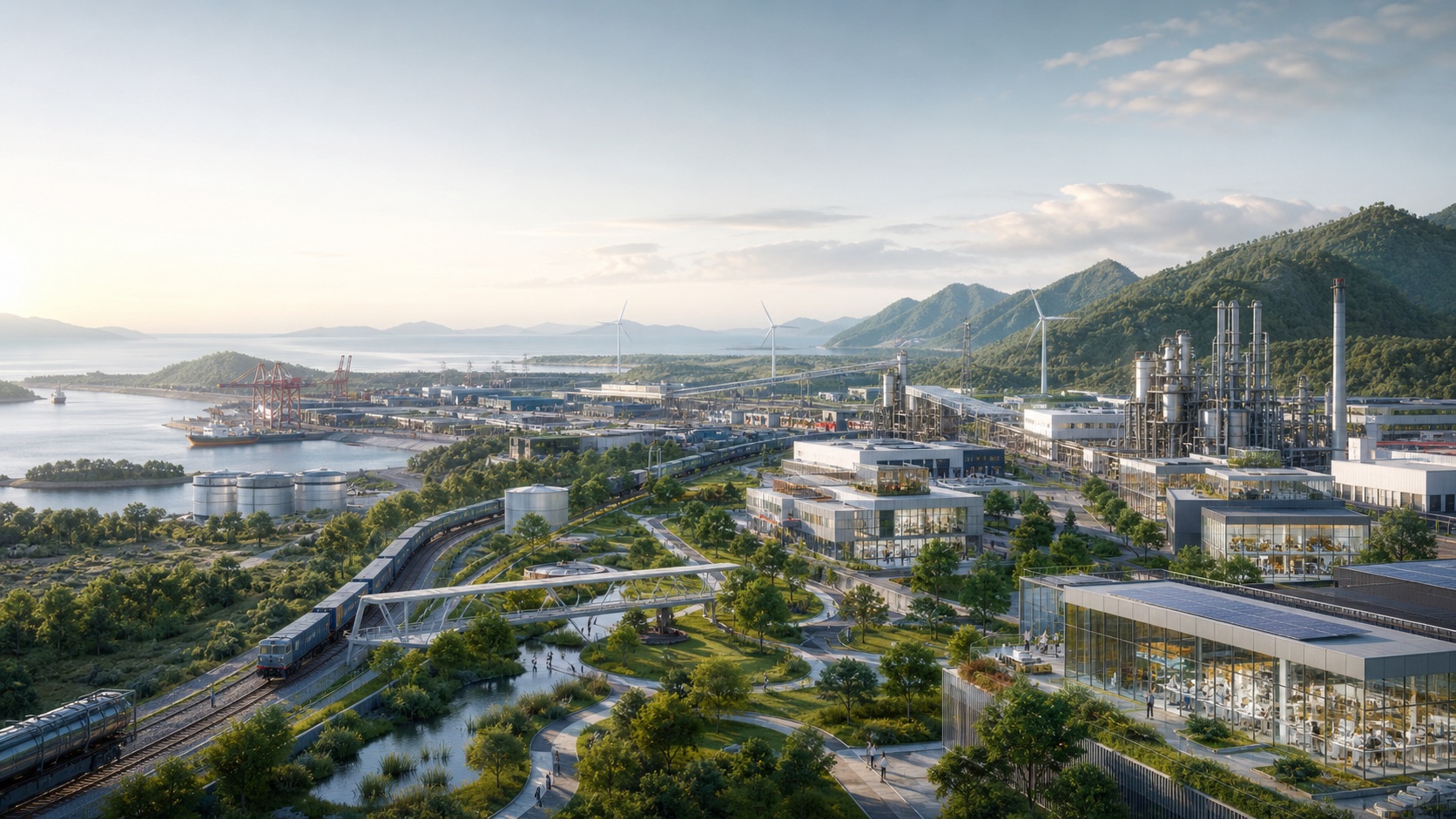
Not a large construction, but a connected economic system: industry + infrastructure + energy + logistics + science + capital.
Индустриальные_мегапроекты_презентация.pptx
Downloading the document...
Version 1.0 • August 2026
1. Summary
The industrial megaproject is not just a large construction project. It is a connected system of industry, infrastructure, energy, logistics, science, technology, capital and personnel, capable of changing the economy of the territory, forming a new market and creating a long-term production circuit.
The key feature of the megaproject is the multiplier effect: around the base object there are chains of suppliers, engineering centers, educational programs, new cities or agglomerations, transport and energy networks, export flows and financial instruments.
2. Criteria of the industrial megaproject
| Criterion | Contents |
|---|---|
| Capital scale | usually tens or hundreds of billion rubles / billions of dollars |
| Horizon | 10–50 years, and for infrastructure and energy - up to 80–100 years |
| Intersectoral connectivity | at least 4–6 related industries |
| Technological core | own engineering, digital or production platform |
| Territorial effect | change in the economy of a region, agglomeration or transport corridor |
| Multiplier | new production, employment, export, tax base and competencies |
| Institutional complexity | state, banks, industrial corporations, development institutions, science |
3. The main types of megaprojects
- Transport and logistics: HSR, ports, airports, international corridors, bridges, tunnels.
- Energy: nuclear power plants, hydroelectric power plants, LNG, energy clusters, grids, storage devices, hydrogen.
- Industrial: metallurgy, petrochemistry, materials, microelectronics, mechanical engineering.
- Resource-processing: + deep processing + logistics + export.
- Urban and agglomeration: new cities, industrial zones, smart-city, campuses.
- Digital: data centers, clouds, AI-computing, telecommunications, satellite infrastructure.
- Environmental: water, waste, recycling, closed production cycles.
4. World Standards
| Project | Country | Scale | Model | Main effect |
|---|---|---|---|---|
| China's high-speed railways | China | above $1 trillion Total investments | State-corporate model | single domestic market, urbanization, export of technologies |
| Channel Tunnel | United Kingdom - France | tens of billions of dollars, including financing | Cross-border concession | Engineering success with a complex debt model |
| NEOM | Saudi Arabia | declared scale > $500 billion | sovereign fund + private equity | city, energy, AI, logistics |
| Akkuyu NPP | Turkey | near $20–25 billion | BOO | power engineering + long-term technological connection |
| Istanbul Airport | Turkey | near $10–12 billion | The concession model | Global Aviation Hub |
| Noor Ouarzazate | Morocco | near $2,5 billion | PPP + MFIs | Renewable Energy |
| Port of Piraeus | Greece | Investments and purchase of shares worth billions of euros | Port concession/corporate management | Logistical entry into the EU |
5. Financial architecture
- Equity of the initiator and strategic investors.
- Project financing of the banking syndicate.
- State guarantees, capital grants and availability payments.
- Concession payments and tariff revenue.
- Infrastructure bonds and CFAs.
- Funds of pension, insurance and sovereign funds.
- Export credit and export risk insurance agencies.
- International financial institutions for cross-border projects.
6. The life cycle of a megaproject
- 0. Strategic hypothesis and national/regional priority.
- 1. Pre-TEO: demand, territory, resources, technologies, restrictions.
- 2. Formation of a project consortium.
- 3. Theo and the financial model.
- 4. Land, permits, PPP/SPIC/SPC concession or other legal model.
- 5. Financial closure.
- 6. Design and localization of the supply chain.
- 7. Construction and commissioning in turn.
- 8. Operation with digital monitoring KPI.
- 9. Expansion, technological update and export of the model.
7. Main causes of failure
| Risk | Manifestation |
|---|---|
| Increased demand | erroneous traffic, freight traffic, consumption or export |
| Underestimation CAPEX | inflation, geology, imported components, change of project |
| Dear Debt | Rising rates destroy the economy of a long project |
| Weak management | blurred responsibility between the customer, concessionaire and contractors |
| Political cycle | change of priorities, cancellation or revision of the project |
| Technological dependence | critical equipment and software from the external circuit |
| Lack of life cycle | there is a construction, but there is no economy of exploitation and renewal |
8. Russian model of industrial megaprojects
For Russia, the most promising model is not a model of single objects, but a model of industrial contours: resource → energy → material → Component → Product → Logistics → Domestic market → Exports.
- Arctic industrial and logistics contour.
- New car industry and transport engineering.
- Deep processing of raw materials and high purity materials.
- New energy and distributed generation.
- Microelectronics, Power Electronics and Industrial AI.
- Water and environmental infrastructure.
- The North-South International Transport Corridor.
- New industrial cities and production agglomerations.
9. Proposed management system
For the portfolio of mega-projects, a single Information and Analytical Center is needed, which works not as a register of buildings, but as a system for selecting, structuring, financing and controlling the full life cycle.
- A single passport for each megaproject.
- Matrix of industries, territories, technologies and participants.
- Rating of economic, technological and social significance.
- Digital twin CAPEX/OPEX, timing and critical path.
- Monitoring of government obligations and debt burden.
- Registry of suppliers and localization.
- Early warning system by cost, timing and demand.
- Public and closed reporting.
10. Passport of the industrial megaproject
- Name and territory
- Strategic objective
- Initiator and Public Partner
- Concessionary / SPV / industrial operator
- CAPEX and OPEX
- Sources of funding
- Period of construction and operation
- Technological core
- Key suppliers
- Localization
- Planned power
- Demand and off-take
- Export potential
- KPI
- Risks
- Socio-economic impact
- Environmental effect
- Output/Transmission/Extension Scenarios
11. Conclusion
The industrial mega-project should be considered as a new unit of strategic development. Its final product is not an object, but a formed economic system. The best global examples show that success is not determined by the size of the budget, but by the quality of the architecture: real demand, long capital, responsible risk allocation, technology platform and full life cycle management.
For Russia, the portfolio of industrial megaprojects can become a practical mechanism for new industrialization, spatial development and technological sovereignty.
Source materials
Originals and versions of the document
- Индустриальные_мегапроекты_аналитическая_доктрина.docxDOCX · main document
- Индустриальные_мегапроекты_презентация.pptxPPTX · related version
Other editions in web format
Each version is disclosed separately; the sequence of the source document is saved.
Industrial MegaprojectsIndustrial_megaprojects_presentation.pptx · web text+
Architecture of formation, financing and implementation of projects of national and international scale
Analytical doctrine • 2026
What is an industrial megaproject
Not a large construction, but a connected economic system: industry + infrastructure + energy + logistics + science + capital.
The key feature is the multiplier effect: around the base object, new production, supply chains, competencies and markets arise.
The final product of the megaproject is not an object, but a new production ecosystem of the territory.
7 megaproject criteria
Capital scale
Horizon 10–50+ years
Intersectoral connectivity
Technological core
Territorial effect
Economic multiplier
Complex institutional architecture
The main types of industrial megaprojects
Transport and logistics — HSR, ports, airports, international corridors.
Energy — nuclear power plants, hydroelectric power plants, LNG, networks, storage devices, hydrogen.
Industrial - metallurgy, petrochemicals, materials, microelectronics, mechanical engineering.
Resource-processing — field → deep processing → export.
Urban and agglomeration - new cities, industrial zones, smart-city.
Digital - data centers, AI-computing, telecommunications, satellite infrastructure.
Ecological - water, waste, reclamation, closed cycles.
World benchmarks: scale and model
| Project | Scale | Model | Main effect |
|---|---|---|---|
| HSR China | >$1 trillion | State - corporate | Single Market and Urbanization |
| Channel Tunnel | Tens $ billion | Cross-border concession | UK - EU connectivity |
| NEOM | >$500 billion Detachment | sovereign fund + private equity | City/AI/Energy |
| Akkuyu NPP | ~$20–25 billion | BOO | the Energy Bond |
| Istanbul Airport | ~$10–12 billion | Concession | Global Aviation Hub |
| Noor Ouarzazate | ~$2.5 billion | PPP + MFIs | Solar Energy |
Financial architecture of the megaproject
Equity of the initiator and strategic investors.
Project financing of the banking syndicate.
State guarantees, capital grants, availability payments.
Tariff revenues and concession payments.
Infrastructure bonds, CFA, pension and insurance funds.
Export credit and international financial institutions.
Life Cycle: From Idea to Operation
The Strategic Hypothesis
Pre-TEO
Consortium
Feasibility study +
Legal model
Financial closure
Design
Construction
Operation
Expansion/export
Why megaprojects fail
Inflated demand: traffic, cargo traffic, exports, solvency.
Underestimation CAPEX: inflation, geology, design changes, imports.
Expensive Debt: Rising rates are destroying the economy of a long project.
Poor management and blurred responsibility.
Policy cycle and re-prioritization.
Technological dependence.
Building without a full life cycle model.
The Russian model: not an object, but an industrial contour
Resource → energy → material → Component → Product → Logistics → Domestic market → Exports.
The main task is the maximum depth of processing and localization of the value chain within the country.
Megaproject should simultaneously solve technological, territorial, personnel and financial tasks.
Priority megaprojects of Russia
Arctic industrial and logistics contour.
New car industry and transport engineering.
High purity materials and deep processing of raw materials.
New energy and distributed generation.
Microelectronics, Power Electronics and Industrial AI.
Water and environmental infrastructure.
MTC "North - South".
New industrial cities and production agglomerations.
Unified IAC of industrial megaprojects
A single passport for each project.
Matrix of industries, territories, technologies and participants.
Rating of economic and technological significance.
Digital twin CAPEX/OPEX, timing and critical path.
Monitoring of state obligations and debt burden.
Registry of suppliers and localization.
Early warning on cost, timing and demand.
Public and closed reporting.
Passport megaproject: what should be fixed
Objective • Territory • Initiator • Public Partner • SPV/operator.
CAPEX/OPEX • Sources of funding • construction and operation time.
Process Core • suppliers • localization • power.
Demand and off-take • Exports • KPI • Risks.
Social and environmental impact • transfer/extension/exit scenario.
Main conclusion
The industrial megaproject is a new unit of strategic development. The result should not be an object, but a formed economic system.
For Russia, the portfolio of such projects can become a practical mechanism for new industrialization, spatial development and technological sovereignty.